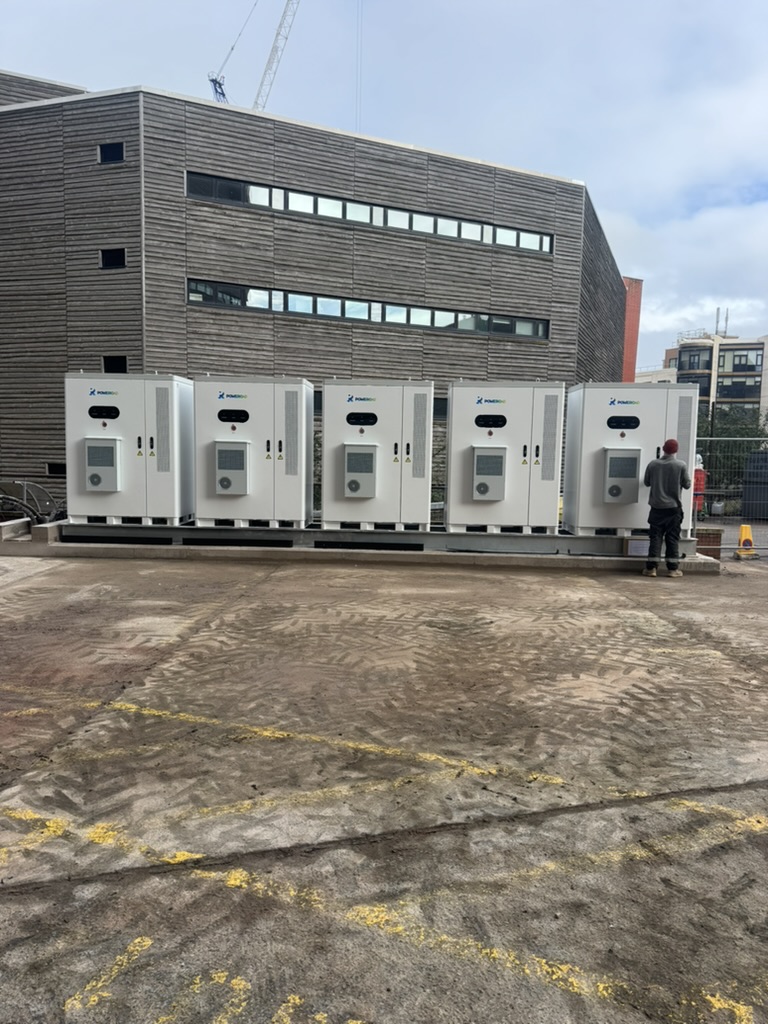
At Bambridge Renewables, battery storage is a specialist part of what we do. Our team's experience spans work on large-scale Battery Energy Storage System (BESS) farms up to 50 MW, through to installing 5 kW battery systems at individual homes. The size changes dramatically; careful electrical design, installation and commissioning still matter at both ends of that scale.
For homeowners in Bristol, the South West and South Wales, that experience means we look beyond the battery box. We consider how the system connects to your home, what your household uses, how it works with solar and tariffs, and whether you want backup during a power cut.
What is a BESS — and what do 50 MW and 5 kW mean?
BESS stands for Battery Energy Storage System: batteries working with power-conversion equipment, controls and electrical protection to store electricity and supply it later. A grid-scale site and a domestic installation serve different needs, but share that basic principle.
MW and kW describe power — the rate at which a system can charge or deliver electricity. One megawatt is 1,000 kilowatts, so 50 MW is 50,000 kW. Energy capacity is different: it is measured in MWh or kWh and helps determine how long that output can be sustained. A 5 kW system does not necessarily have a 5 kWh battery.
Large-scale experience, without a one-size-fits-all approach
Working on large battery projects brings attention to the wider electrical installation: equipment layout, cable routes, isolation, protection, controls and commissioning. Those are useful disciplines to bring to a house, even though a home's supply, equipment and installation requirements are very different.
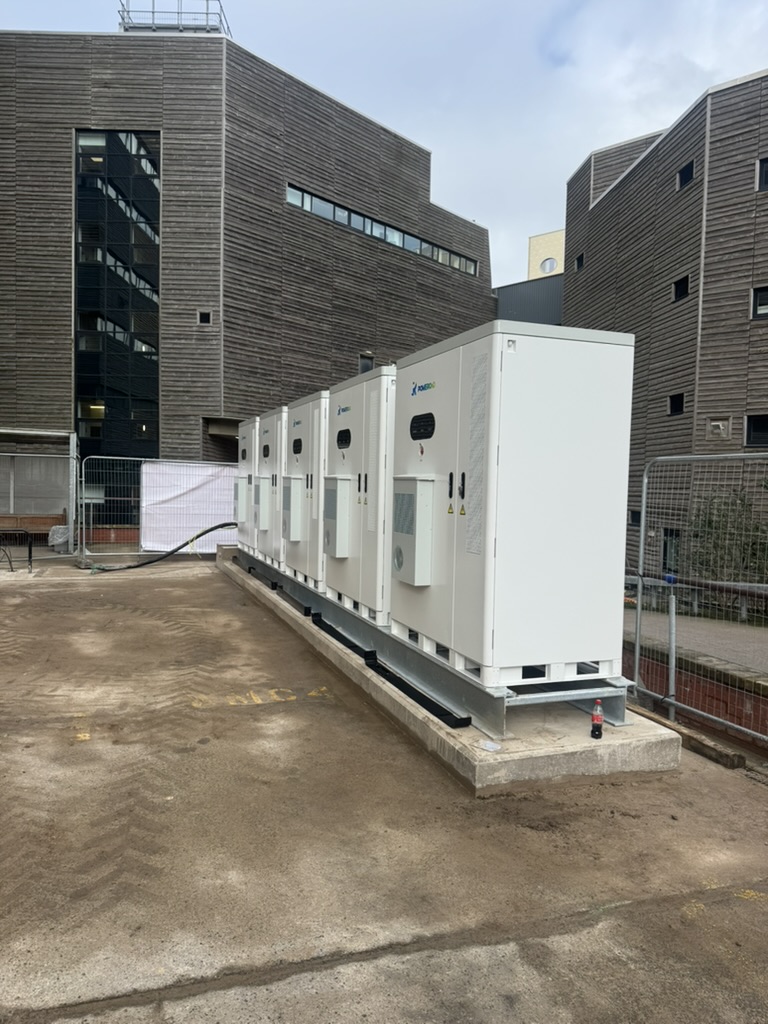
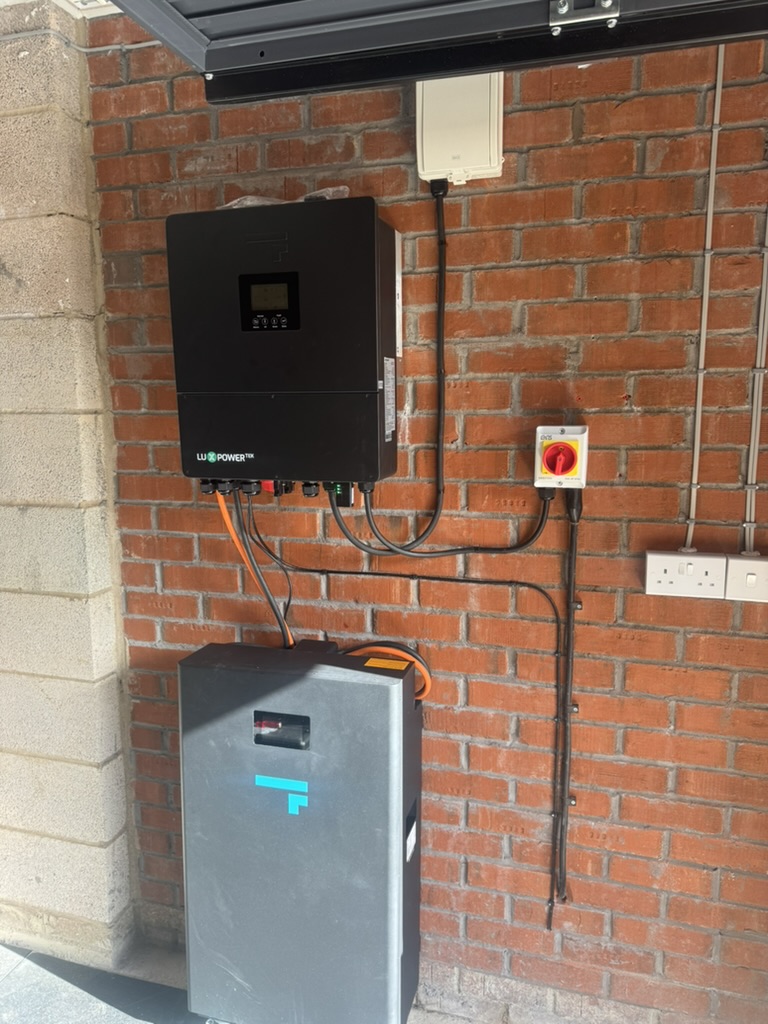
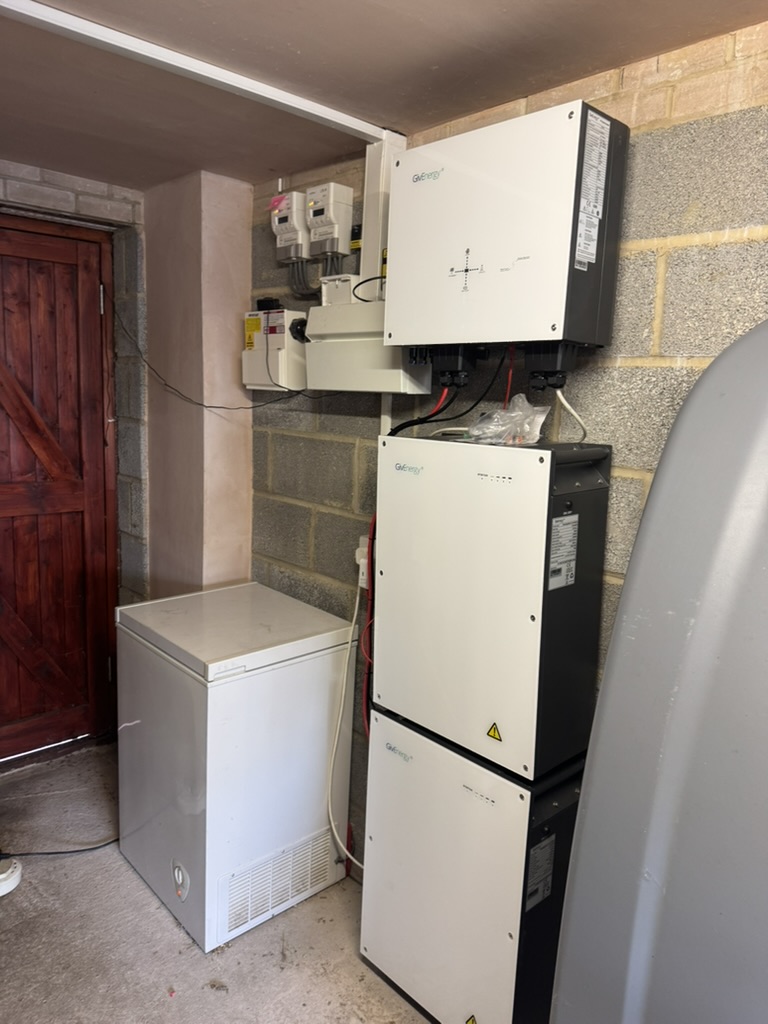
Our experience on projects up to 50 MW is team experience, not a claim that Bambridge alone designed or delivered every part of those farms. Likewise, these photographs show our project work across different scales; we are not assigning a 50 MW rating to the pictured cabinets.
What that means for your home battery
- Usage-led sizing: look at when you use electricity, not just your total monthly bill.
- Power as well as capacity: check what the inverter and battery can supply together when appliances run at the same time.
- Compatibility: assess existing solar, inverter equipment, grid connection and the home's electrical installation.
- Installation detail: plan equipment positions, safe access, cable routing and the manufacturer's requirements.
- Set-up and handover: explain charging schedules, reserve settings and monitoring rather than simply leaving an app login.
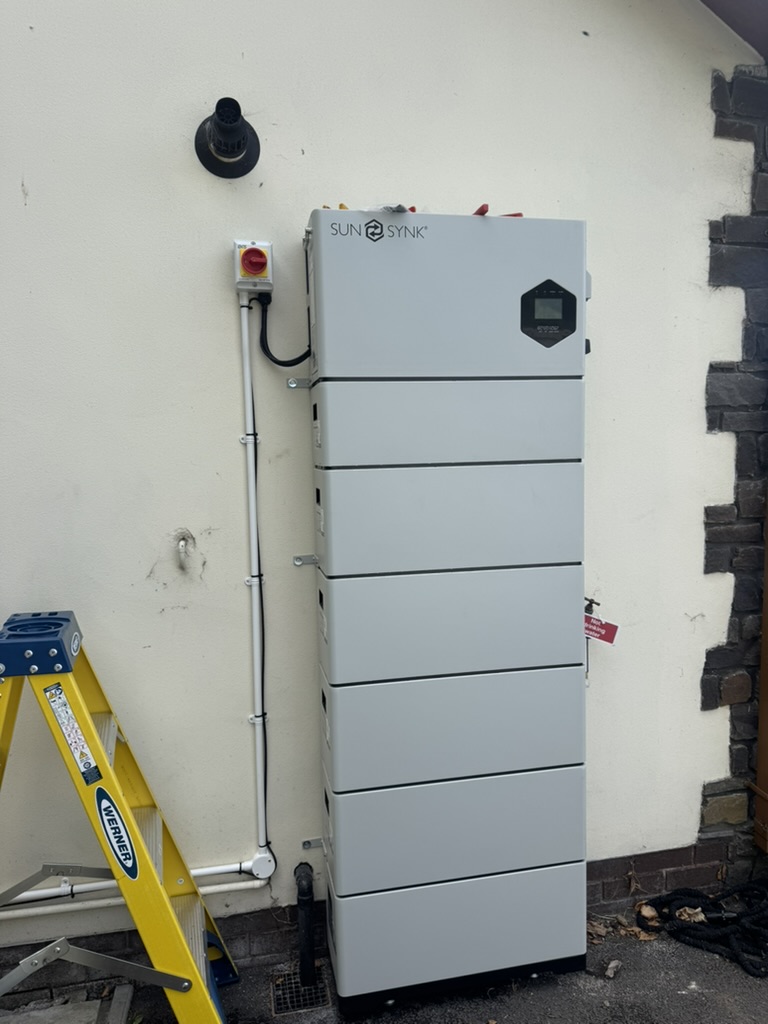
Different homes need different systems
A household with solar may want to retain surplus daytime generation for the evening. Another may want to charge from the grid on a suitable cheaper-rate tariff. A third may care most about keeping essential circuits running during an outage. These priorities lead to different designs — there is no single battery package that is right for everyone.
Our supplied installation photos include Sunsynk, LuxPower, GivEnergy and Solis equipment. The recommendation should follow your requirements and the equipment's compatibility, not simply the brand in a photograph. Find out more on our home battery storage page.
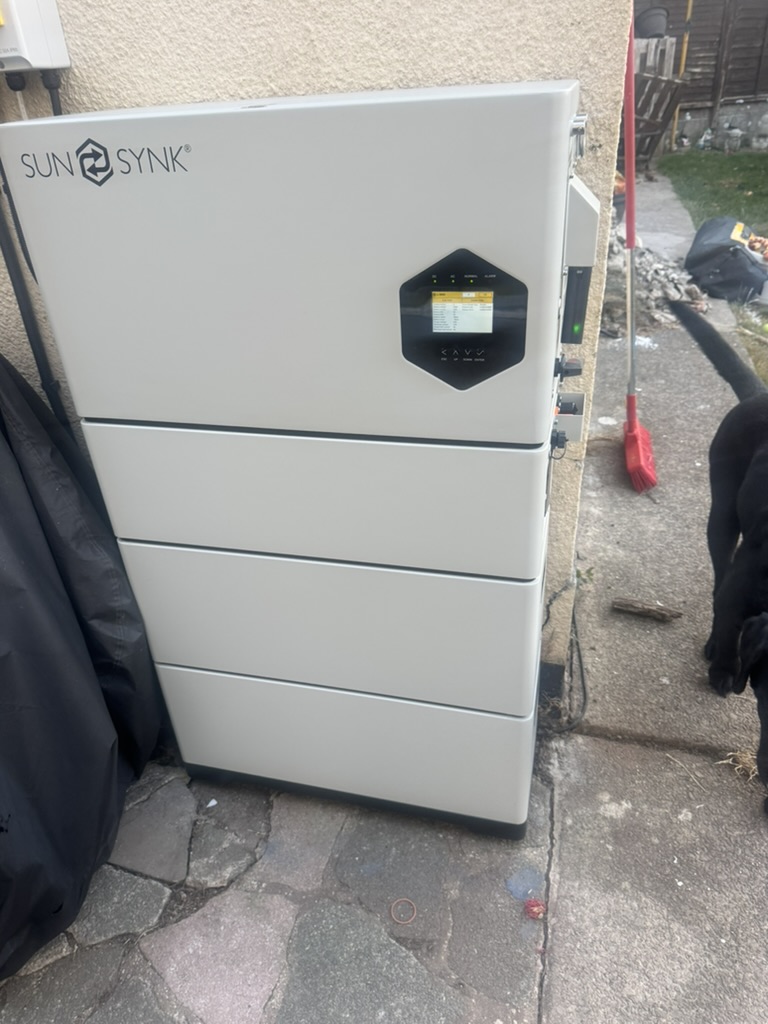
Backup is a design choice, not an automatic promise
Not every solar or battery system will supply your home when the grid fails. Backup requires compatible equipment and a safe way to isolate the installation from the grid. Selected essential circuits can often be a lower-cost option than a whole-home gateway, depending on the system and the work needed.
We can assess priorities such as lighting, your router and selected kitchen circuits. Backup output, remaining battery charge and appliance demand still limit what can run and for how long. EPS or island mode is not automatically an uninterrupted UPS supply. Our battery backup guide explains the options and shows a separate essential-circuit board.
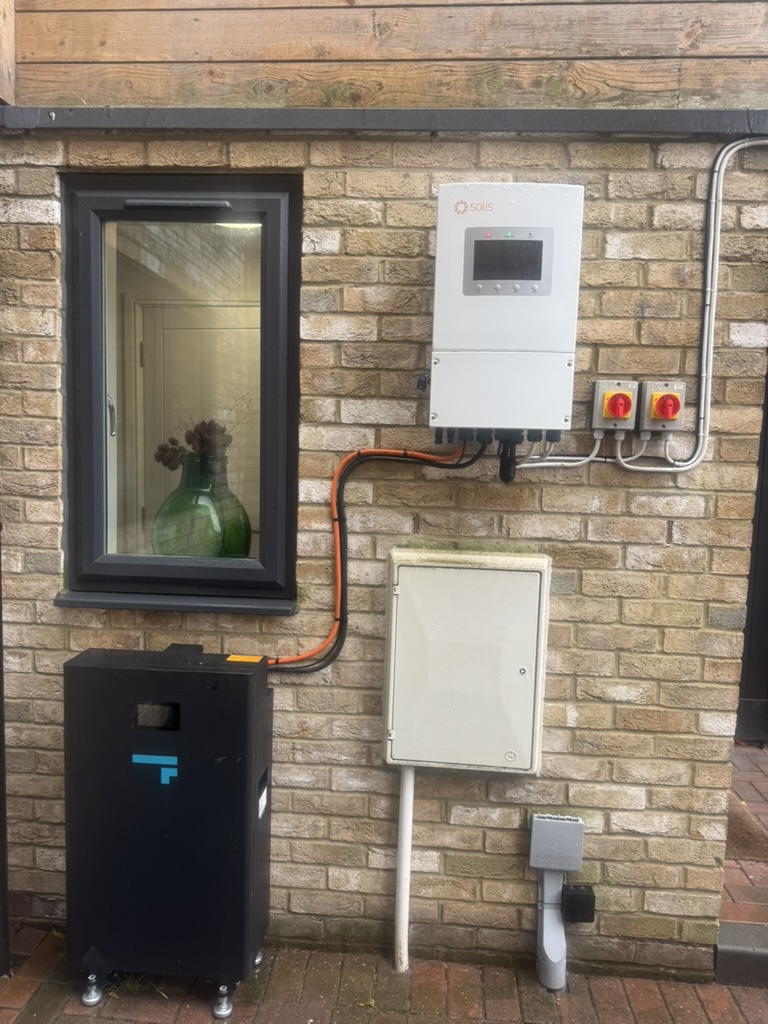
The work behind the finished installation
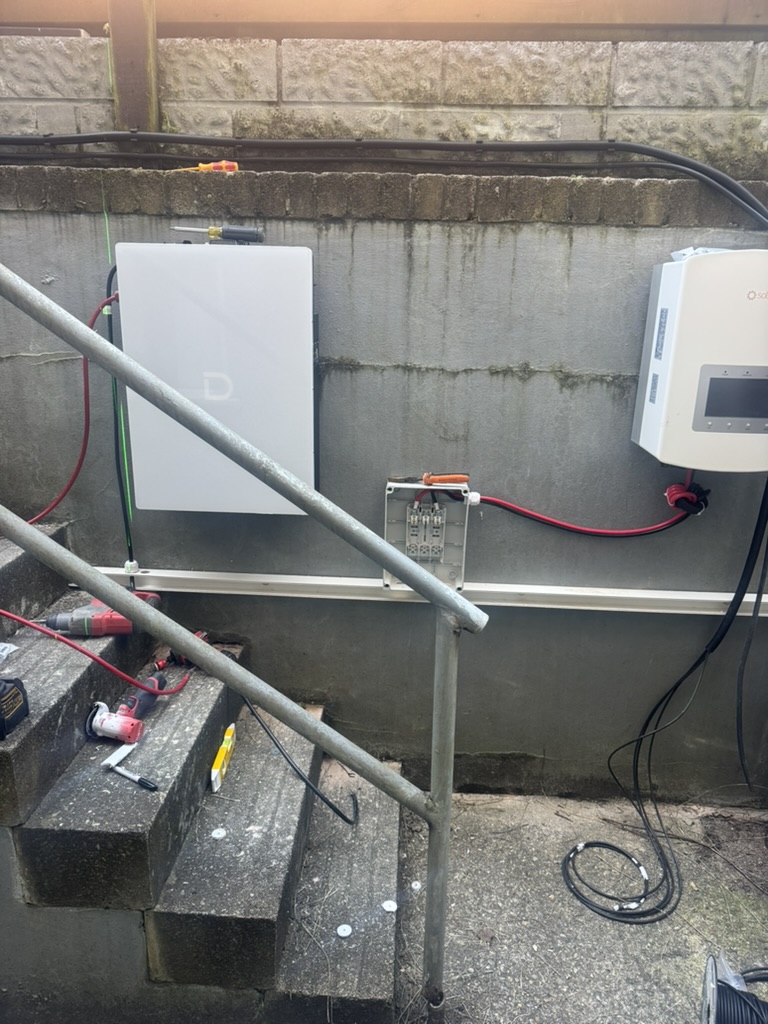
A finished battery installation is more than mounted equipment. Routing and terminating cables, fitting isolation and protection, checking connections and commissioning are part of the job. The photograph below shows work in progress, not a completed installation or a configuration to copy.
Start with your home, not the biggest battery
Experience at scale does not mean recommending an oversized system at home. We start with your usage, tariff, existing solar, available space and future plans, then assess a suitable combination of battery capacity and power output. Savings and runtime depend on the actual design and how you use it; they are not guaranteed by a battery's size or brand.
If you are considering storage or upgrading an existing system, talk to our local team. You can also see more of our installation work on The Team in Action, or explore solar PV if you are planning a combined system.