For many homeowners, a good local solar installer offers one practical advantage: accountability stays close to the job. The company that surveys your roof, designs the system and supports it afterwards depends on its reputation across Bristol and the surrounding area. That can make communication and aftercare feel more direct than a high-volume national sales journey.
Local does not automatically mean better, and a national company is not automatically worse. The safer choice is the installer that can show MCS certification, suitable electrical credentials, a property-specific design, an itemised quotation and a clear route for support after commissioning. The value of choosing local is that these checks can be easier to connect to a real team, a real service area and work completed near you.
What homeowners usually mean when they ask for a local installer
People who say they do not want to feel processed by a corporate sales machine are usually asking for something reasonable. They want the person discussing the system to understand their property. They want to know who is responsible if the design changes. They want a support contact who can see the survey, quotation and commissioning record rather than starting again from a script.
A local solar business should be able to make that responsibility visible. The address, credentials, service area and contact details should be easy to verify. The proposal should explain who surveys the property, who completes the electrical work, who handles the grid paperwork and who answers questions after handover. Ours are set out on the About Us page.
Local accountability can improve the customer experience
Solar is a long-term installation, not a parcel that arrives at the door. The roof, electrics, household usage and local planning position all affect the final design. If sales, survey, installation and aftercare are split across unrelated teams, important context can be lost between stages.
A strong local installer keeps a clear record of those decisions and gives the customer one accountable company throughout the project. That does not require the same individual to carry out every task. It does require the company named on the quotation to own the quality of the finished work and the support that follows.
Before signing, ask for the name of the contracting company and confirm whether any part of the work is subcontracted. If subcontractors are used, ask who checks their work and who remains responsible for correcting a problem.
A proper survey matters more than a quick remote price
Online estimates are useful for early budgeting, but they are not a substitute for checking the property. A reliable solar PV proposal should reflect the usable roof area, orientation, shading, roof condition, access, cable routes, consumer unit, earthing and the household's electricity demand.
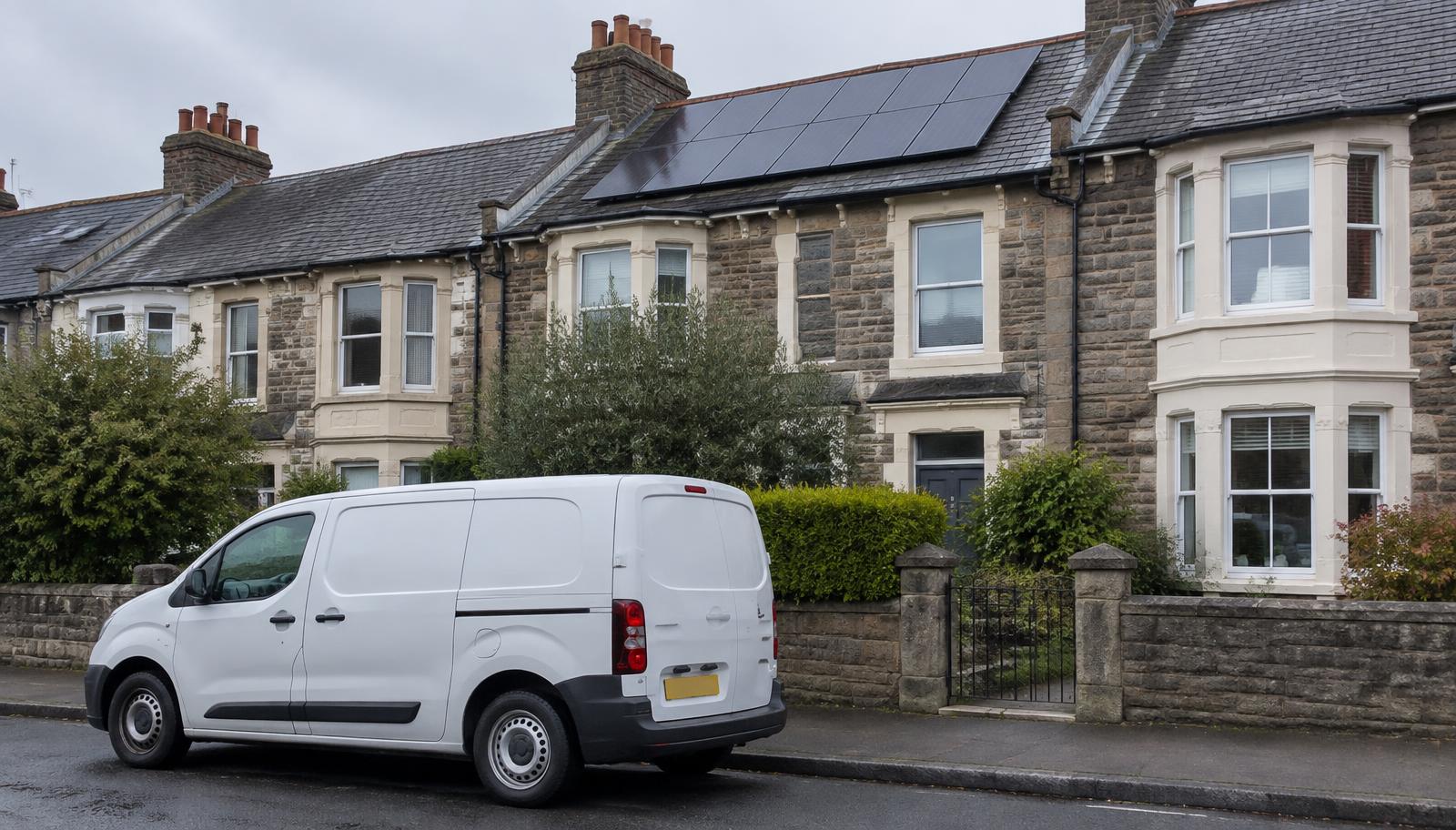
Bristol adds its own practical considerations. Terraced roofs can have chimneys, dormers and limited rear access. Older properties may have slate or clay coverings. Listed buildings and some conservation-area homes need additional planning care. An installer that regularly works in Bristol should know which questions to raise early, while still checking the current council guidance for the individual property.
The survey should produce more than a panel count. It should lead to a clear layout, a generation estimate with stated assumptions, an electrical design, an explanation of the G98 or G99 connection route and a list of everything included in the price.
For a fuller roof checklist, read our guide to solar panels in Bristol and roof suitability, or see how we approach system design on the solar PV page.
Workmanship is visible long after the sales conversation
Solar panels are the most obvious part of an installation, but quality also shows in the details people do not see from the street. Cable routes should be neat and protected. Roof fixings must suit the covering and structure. Inverters, isolators and batteries need suitable locations and clearances. Labels, testing, commissioning records and handover documents must be complete.
Company size does not guarantee this standard. The useful questions are who completes the work, which electrical scheme covers it, how quality is checked and what happens if a defect appears later.
Look for relevant evidence rather than broad promises. For domestic solar, the installer should be certified for the technology through MCS. Electrical work should be carried out by appropriately qualified people, and an NICEIC listing is one way to verify an electrical business. Membership of the Renewable Energy Consumer Code gives buyers an additional consumer-protection framework for the sales and contracting process.
Local reputation creates a direct incentive to put problems right
A local installer earns future work in the same places where previous systems can be seen. Reviews, recommendations and word of mouth travel quickly between neighbours, local groups and nearby businesses. That creates a practical incentive to communicate well, leave the property tidy and respond when a customer needs help.
This is not a reason to accept testimonials without checking them. RECC advises consumers to make sure the testimonials they rely on are genuine and to obtain multiple quotations. Ask to see recent, relevant work and check independent registers rather than relying only on badges shown in a sales brochure.
Aftercare should be agreed before installation
Most solar systems operate quietly in the background, but customers still need a clear handover and a support route. The installer should explain the monitoring application, normal generation patterns, basic maintenance and the main fault indicators. The customer should also know whom to contact if generation drops, an inverter reports an error or a roof issue appears near the array.
A local team may be well placed to provide that support because it already works within the same service area. Do not assume speed or availability, however. Ask what aftercare is included, how faults are triaged, whether call-outs are chargeable and how manufacturer warranty claims are handled.
National solar companies can still be a good choice
National providers can offer established processes, purchasing scale, wider finance options and coverage across large areas. Some deliver excellent surveys, installations and aftercare. The potential weakness of a high-volume model is separation between the sale, technical design, installation crew and support desk. The customer may need to repeat information or work through several teams when something changes.
The same comparison should be applied to every company. Ask who owns each stage, whether the proposal is specific to the property and how support works after payment. Choose the evidence, not the size of the logo.
How to compare a local and national solar quotation
Use the same checklist for both proposals.
- Confirm the legal name of the company taking the deposit and providing the workmanship warranty.
- Verify MCS certification for solar PV and check the electrical contractor on an appropriate register.
- Ask who carried out the technical survey and whether the installer has physically inspected the roof and electrical system.
- Compare the actual panel layout, inverter design, shading assumptions and predicted generation.
- Check the assumptions used for electricity prices, self-consumption, export and battery operation.
- Make sure scaffolding, roof access, electrical upgrades, grid paperwork, monitoring and handover documents are clearly included or excluded.
- Ask whether the installation team is employed or subcontracted and who signs off the quality of the work.
- Read the product, workmanship and insurance-backed warranty terms rather than relying on headline years.
- Confirm the aftercare contact, likely response route and any call-out charges.
- Obtain more than one quotation and do not accept pressure to sign immediately.
Our guide to choosing an MCS solar installer explains the credentials and questions in more detail. You can also compare indicative costs in our Bristol solar panel pricing guide and on the pricing page.
Why homeowners choose Bambridge Renewables
Bambridge Renewables is based in Bristol and serves homes and businesses across Bristol, the South West and Wales. The business displays MCS, NICEIC and RECC credentials, and its services include solar PV, battery storage, commercial solar and EV charging.
Our aim is to recommend a system that fits the property and the customer's electricity use. That means looking at the roof and electrical installation before treating an estimate as a final design. It also means setting out the assumptions, inclusions and grid-connection route clearly enough for the customer to compare the proposal properly.
If you are researching solar PV in Bristol, Bath, Somerset, Gloucestershire or South Wales, speak to us about the property and the result you want from the system. A local survey will tell you more than a national headline price. There is a separate South Wales homeowner guide if that is where your property sits.
Questions people ask about local solar installers
Are local solar panel installers better than national companies?
A good local installer can offer clearer accountability, direct communication and knowledge of the area. Local status is not proof of quality on its own. Verify MCS certification, electrical credentials, the proposed design, contract terms and aftercare before deciding.
Are local solar installers cheaper?
Not always. A national company may benefit from purchasing scale, while a local installer may have lower sales overheads or a simpler process. Compare itemised quotations on the same system design, inclusions, warranties and assumptions rather than comparing one headline price.
How do I check whether a solar installer is genuine?
Search the MCS installer register for the company and technology, check the electrical business on the NICEIC or another appropriate register, and confirm any RECC membership. Match the legal company name on those records to the quotation and contract.
Should a solar company inspect my property before I sign?
You should receive a property-specific technical assessment before the final design is agreed. The roof, shading, structure, electrics, access and household demand can all change the equipment, layout, price and connection route.
Does Bambridge Renewables install solar panels outside Bristol?
Bambridge Renewables serves Bristol, the South West and Wales. Contact the team with your postcode and project details to confirm coverage and arrange the appropriate survey.