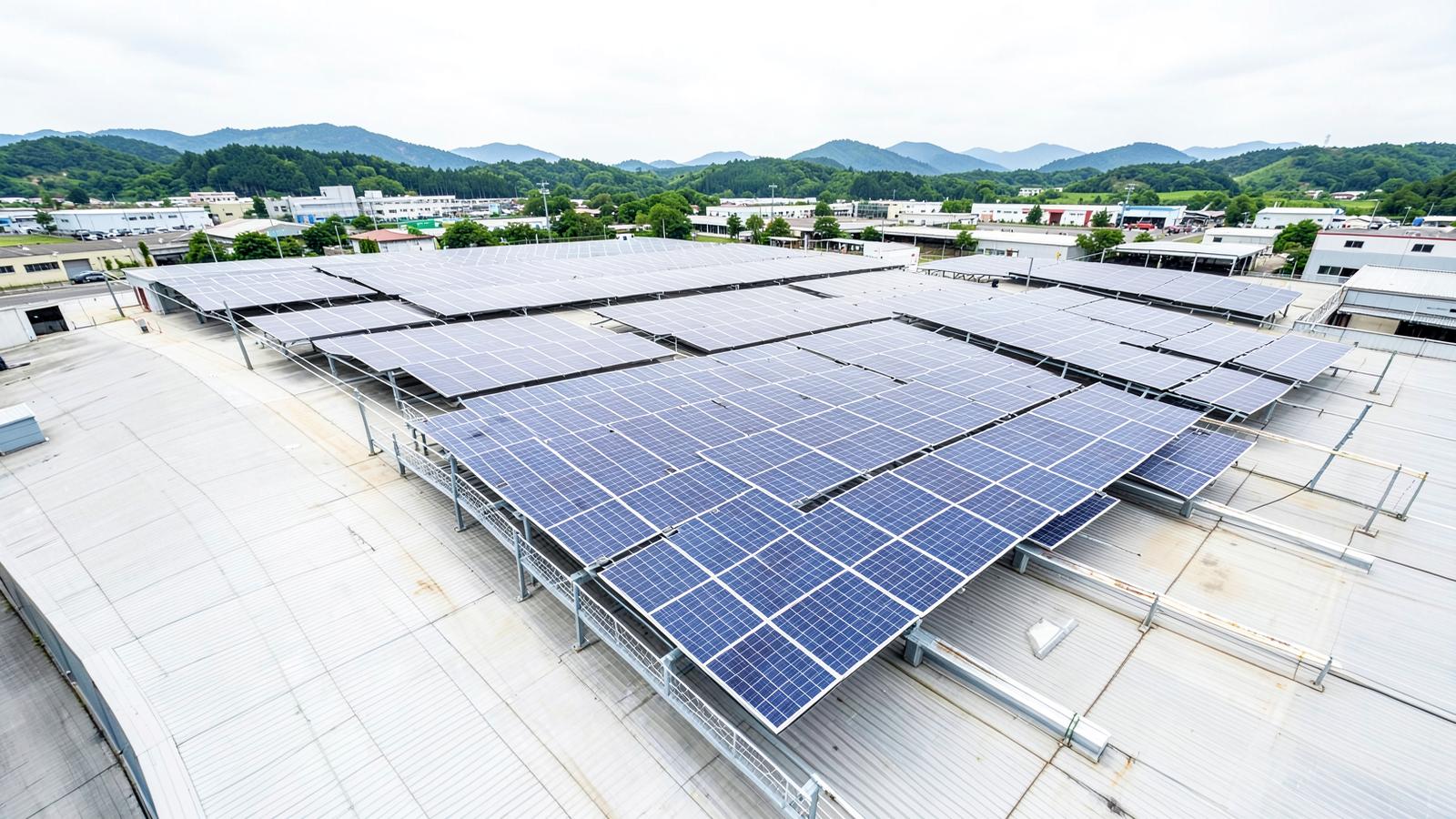
Start with site electricity demand, roof condition, occupancy rights and the grid connection — not a generic panel count. Those four things determine the safe system size, how much you can use on site, whether export will be constrained, and what enabling work the project actually needs. Everything else, including payback, follows from them.
1. Get the half-hourly consumption data
Most commercial supplies are metered half-hourly and the data can be requested from your supplier. A full year of it is the single most valuable input to a commercial design, because it shows when the site actually draws power rather than what anyone assumes.
- Separate weekday, weekend and shutdown patterns — a site that closes on Fridays has a different design from one that runs six days.
- Identify the daytime baseload that a solar array can offset directly.
- Note seasonal swings: refrigeration, compressed air, heating and process loads all move through the year.
- Record your current import rates and standing charges, since self-consumed units are valued at your full import rate.
Separate current load from future load
Planned changes matter as much as history — new machinery, additional shifts, electrification of heat, or a fleet moving to EV charging. Design around where the site is going, not only where it has been.
2. Confirm roof ownership, lease and consents
- Who owns the roof, and does the lease permit an installation and the equipment remaining in place?
- How long is left on the term, and does that align with the asset life?
- Are landlord consent, superior landlord consent or mortgagee consent required?
- Does the insurer need to be notified, and are there conditions attached?
This is a legal and commercial question rather than a technical one, and we are not able to give legal advice — take your own advice on the lease and any consents before committing.
3. Commission a detailed roof survey
- Structural capacity for the additional dead and wind load, with a structural engineer's opinion where required.
- Sheet type, age, condition and remaining life — recovering a roof after installation is expensive.
- Rooflights, smoke vents and their operation, which must not be obstructed.
- Drainage, gutters and valleys, and access for maintaining them.
- Safe access, fall protection, walkways and edge protection for installation and ongoing maintenance.
- Asbestos information where the building's age makes it relevant; the duty holder's asbestos survey should be reviewed before any roof work.
- Plant, ducting and other obstructions that reduce usable area or cause shading.
4. Establish the grid connection position early
Commercial solar projects in South Wales commonly need a G99 application, particularly larger or higher-export installations. Some small generation systems may use G98 if they meet its limits; the correct route depends on aggregate capacity, phase arrangement and equipment. Where G99 applies, approval is needed before connection. The outcome may include an export limit, which is a normal and workable result delivered through an approved export-limitation scheme. The application timeline can be the longest single item in the programme, so start it early.
- Confirm the existing supply capacity and whether the site is single or multiple supplies.
- Check the switchroom, main panel and available ways for the connection.
- Ask who prepares and submits the application, and what happens if a connection cost is returned.
- Understand how an export limit would affect the design and the business case.
The domestic and commercial routes are explained in G98 and G99 explained.
5. Plan operations, maintenance and monitoring
- Monitoring at inverter or string level so faults are visible rather than discovered on a bill.
- Alerting, and a named responsibility for acting on alerts.
- A planned inspection regime, including electrical testing intervals.
- Inverter replacement budgeted within the asset life.
- Spares availability and manufacturer support in the UK.
6. Compare quotes on the same assumptions
Commercial proposals are easy to make look attractive by shifting an assumption. Fix the assumptions first, then compare.
- The same self-consumption assumption, derived from your half-hourly data rather than a default.
- The same import and export prices, clearly stated.
- The same treatment of enabling work: structural strengthening, access equipment, switchgear and connection costs.
- The same inclusion or exclusion of design fees, applications and commissioning.
- Like-for-like equipment, warranty terms and O&M scope.
How the underlying economics work is set out in commercial solar payback explained. We do not publish payback numbers for a site we have not assessed — the figures only mean something once the data is real.
What we need for an initial review
- Twelve months of half-hourly consumption data, or your recent bills if the data is not yet available.
- The site address and a roof plan or recent aerial imagery.
- Roof construction, approximate age and any known condition issues.
- Ownership or lease position, and any consents likely to be needed.
- Details of planned load changes such as new plant or EV charging.
- Existing supply capacity and any known network constraints.
Our commercial approach is on the commercial solar page, indicative pricing sits on the pricing page, and you can send us the details to start a proper assessment.